

BUSINESS PROCESS MANAGEMENT
Business process management and orchestration
Point automation solves one step. Real processes span dozens of steps, several systems, and both people and machines, and that is where they fall apart: work stuck in inboxes, no single source of truth for a case, exceptions handled by whoever happens to notice. An intelligent business process management suite orchestrates the whole flow, deciding what happens next, who or what does it, and what to do when reality does not cooperate.
- One governed flow modeled in BPMN, versioned and auditable
- People and machines orchestrated with state, SLAs, and escalation
- A complete audit trail, so any case can be seen and proven
An iBPMS is the conductor, not another instrument.
It sits above your bots, apps, and services and drives the end-to-end process as one governed flow, modeled in BPMN so it is explicit, versioned, and auditable.
Why the model matters: a process becomes something you can see, change, and prove, rather than logic buried across a dozen disconnected tools.
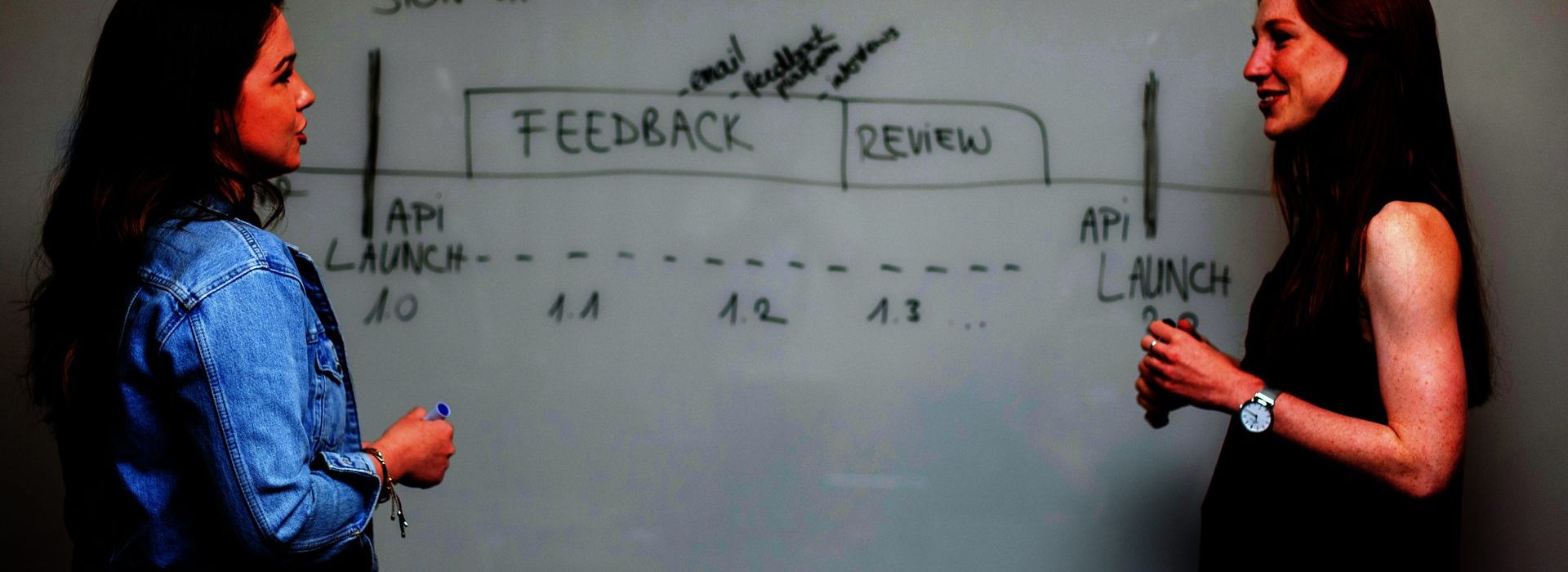
Individual automations come and go. The process outlives them.
Orchestration is what makes hyperautomation more than a pile of point automations.
A bot executes a step. An agent handles an ambiguous input. Document processing reads the paperwork.
The iBPMS decides the order, manages the hand-offs between human and machine, and guarantees the case reaches a correct end state. Without it, each automation is an island, and the gaps between them are where cases get lost.
Orchestration is a design problem first, and a build problem second.
Model the target flow
We map the end-to-end process in BPMN, including every exception and hand-off, so the design reflects reality rather than the tidy diagram.
Separate the decisions
Business rules are pulled out of code into a governed decision layer the business can read and change.
Wire the tasks
Human tasks get assignment, SLAs, and escalation. System tasks connect to bots, agents, and services through clean integration.
Instrument the case
Every case carries live status, timers, and an audit trail from the first step.
Deploy and improve
We release, monitor real performance against SLAs, and feed process mining findings back into the model to keep tightening it.
Enter where you need to, from modeling a single flow to integrating a full estate.
Workflow Design and Modeling
The BPMN model of your process, exceptions and all.
Process Automation and Optimization
Orchestrated, automated flows tuned for cycle time and cost.
End-to-End Process Integration
Connecting the systems, bots, and services a flow depends on.
Process Monitoring and Analytics
Live case visibility, SLA tracking, and performance analytics.
Individual automations come and go. The process outlives them.
Modeling the flow explicitly means you can swap a bot for an agent, or change a rule, without unpicking the whole system.
It is also where governance becomes real: when an auditor asks how a case was handled, the answer is the model and its audit trail, not an archaeology project. Our dedicated teams own the orchestration estate so it stays coherent as processes evolve.
[XX%] reduction in end-to-end cycle time, and [XX%] of cases straight-through with human review on exceptions. Placeholders, industry-typical; Softobiz to verify.
One governed flow is usually the first win.
Outcome: For Sydney Markets, we modeled a process spanning [X] systems in BPMN, cut end-to-end cycle time by [XX%], and ran [XX%] of cases straight-through with human review only on exceptions. Softobiz to supply verified engagement and metrics.
What operations leads ask before week one.
RPA executes a single step. An iBPMS orchestrates the whole flow above the bots: it decides the order, manages hand-offs between people and machines, and guarantees each case reaches a correct end state.
No. The orchestration engine sits above what you already have, calling your bots, agents, APIs, and services. It coordinates them rather than replacing them.
The flow is modeled explicitly in BPMN and every case carries live status, timers, and an audit trail. When an auditor asks how a case was handled, the answer is the model and its record, not an archaeology project.
The flow only works if the pieces it calls do.
Intelligent Process Mining
Reconstruct how the process really runs, then feed findings into the model.
Robotic Process Automation
The rules-based, high-volume steps the orchestration engine calls.
Automation Advisory and Consulting
Score the backlog and match each candidate to the right capability first.

Bring us a process that spans too many systems. And too many hand-offs.
We will model it, automate what should be automated, and run it as one flow you can see and prove.